
Project planning
From site inspection to a realistic clearance quotation
The factors behind a responsible terrain-clearance quotation: area, vegetation, access, slope, hidden risks, material handling and the required finish.
ZVER · Alpin Jobs EOOD · Bulgaria · EIK 200328636The lowest initial price is not always the most economical solution. If access, residual material, stumps, transport or the required final condition are omitted, they usually return as additional work. A sound quotation states what is included, what is excluded and how the result will be accepted.
1. Area is just the starting measure
Acres, square meters, or linear meters give scale but do not describe density. Sparse grass vegetation, thick bushes, self-seeded trees and stumpy terrain are different tasks. The diameter and distribution of stems, stones, debris and areas to be preserved are important.
2. Access determines the possible technique
Road width and load capacity, gantry, bridge, overhead lines, turning radius and loading space can limit the machine even before work begins. The long movement inside the site, the need for a platform and the difficulty of reaching fuel and service are also part of the organization.
3. Terrain, soil and hidden obstacles
Slope, wet areas, unstable ground and rocks affect performance and safety. Fences, metal, concrete, manholes, cables, pipelines and unknown debris may require manual preparation, another machine or a stop until clarified.
4. The machine follows the task
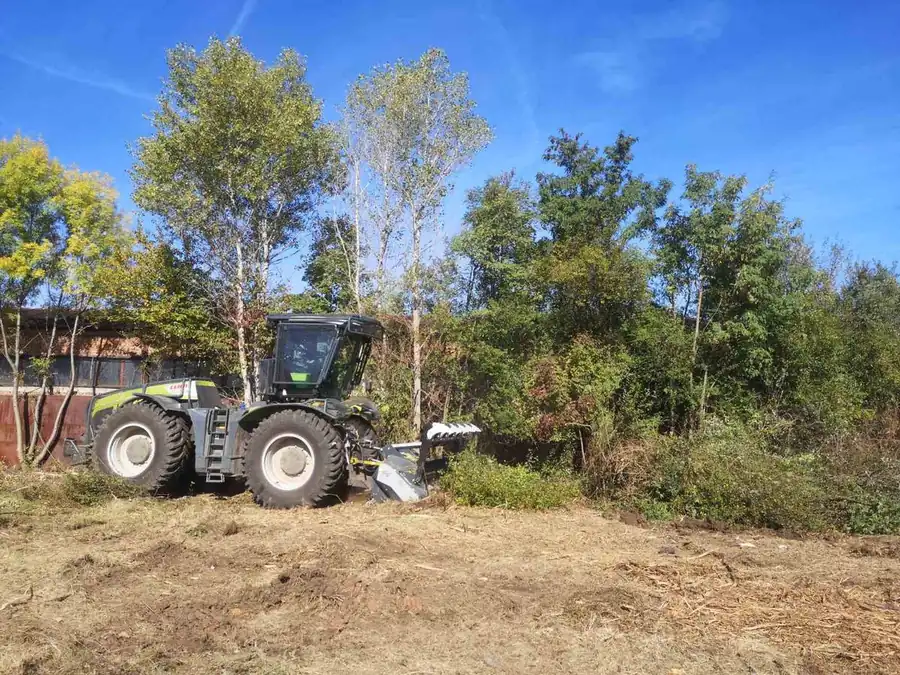
A mulcher reduces vegetation on a site, but does not automatically replace an excavator, crusher, specialised milling machine or bulldozer. The circular-saw system can restore the required clearance envelope along a linear route, and the specialised milling machine can process stumps and root layer. Sometimes the most cost-effective option is a sequence of two machines, rather than a long job with one unsuitable one.
The detailed selection is covered in the upcoming machine and technology guide. The specific configuration is confirmed after the data and inspection.
5. What happens to the material
The price varies significantly depending on whether the crushed material can remain, must be collected, sorted, loaded, transported or handed over as applicable. Wood, soil, stone, concrete, metal and mixed waste are not treated as one stream.
Read also when the material stays in place and when it is removed.
6. Term, mode of operation and external restrictions
Urgency, limited time windows, traffic, neighboring activities, fire hazard period, noise restrictions and work around operating infrastructure may require additional organization. Authorizations and approvals are separate from physical execution and must have a clear person responsible.
7. The end result must be measurable
"Cleared terrain" can mean passability, gauge restored, maximum residue height, stumps treated, base prepared or ready for next machine. The bid must link the operations to a specific acceptance criterion and separate the visible result from engineering, environmental or contracting acceptance.
How we go from an inquiry to an offer
Prepare the inquiry shortlist and send it via the contact form. A preliminary photo opinion is not a final offer when there are significant unknowns.
- We get location, approximate area, photos, access and desired result.
- We separate the confirmed facts from the unknown and decide whether an inspection is necessary.
- On the ground, we check borders, obstacles, infrastructure, material and work logistics.
- We define operations, technique, sequence and exceptions.
- The offer describes quantity or scope, price, term, responsibilities and acceptance criteria.
Discuss the actual site with our team.
Send the location, approximate area, photographs, access information and required result.