
Energy infrastructure
Vegetation clearance and maintenance for solar parks
Controlled work around solar infrastructure, cable routes, structures and service corridors during construction and operation.
ZVER · Alpin Jobs EOOD · Bulgaria · EIK 200328636The target isn't just short grass. Maintenance must maintain access for inspection and emergency response, limit combustible mass, and not damage load-bearing panels, cables, grounding, drainage, or fencing. The technical condition and electrical safety are controlled by the competent persons of the operator.
First we divide the park into work zones
For each area, the operator confirms the permissible technique, height of the residue, mode of access and way of working around the facilities.
- wide row spacings with sufficient gauge for mechanized work;
- stripes next to structures and modules;
- cable routes, shafts, inverters, substations and designated stop zones;
- fences, entrances, cameras and security equipment;
- service roads, drainage, embankments and outer perimeter.
How we choose the technique
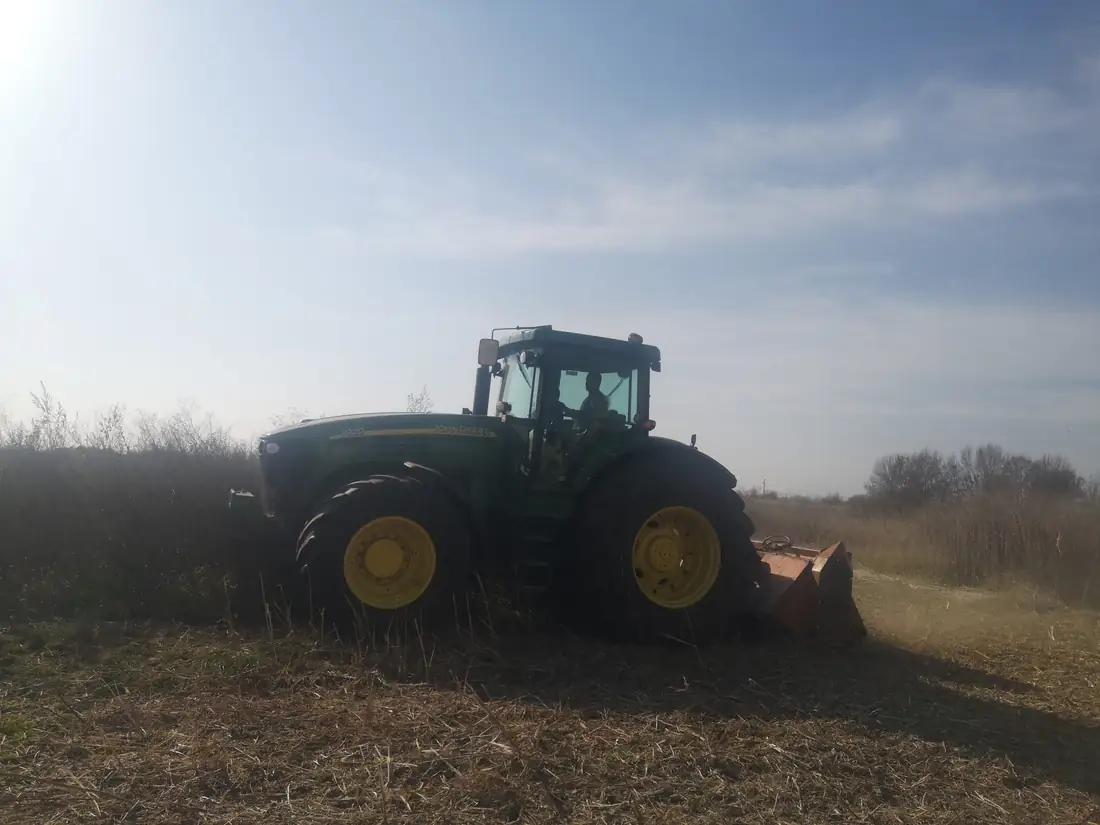
A lawnmower or suitable mulching equipment can work in the open rows. Compact technique and manual operation are used in narrow or sensitive areas. Larger self-grown shrubs and trees require a separate plan because falling, cutting and moving them can affect structures.
Forest mulcher and heavy equipment are not allowed just because they have high productivity. Verification of gauge, terrain loading, rock, dust, direction of discharge and known underground/aboveground features is required.
Protection of panels and infrastructure
Before the start, a plan of the zones, access and stop conditions are obtained. An unknown cable, damaged marking, sagging element, exposed wire or conflict with structure stops the relevant zone and is reported to the person in charge. The vegetation contractor does not diagnose or repair the electrical system.
Combustible material, dust and drainage
Accumulation of dry mass around equipment and fencing should be avoided according to the site plan. Crushed material may remain only if it is permissible and does not block inspection, cooling, drainage or fire access. Dust and particulate matter are also assessed prior to operation.
Support is calendar plus real state
An annual date is not a one-size-fits-all solution. Rainfall, vegetation types, soil, season and operator requirements alter growth. The work plan uses periodic inspections and intervention thresholds so that areas are treated before access or safety is compromised.
Report by Zones
- List of allowed and excluded areas.
- Date, operation, technique and responsible person.
- Before and after photos from the same control points.
- Detected defects or obstacles transmitted without intervention.
- Measurable outcome for vegetation, access and residual material.
What the service does not promise
Vegetation clearance does not certify electrical health, fire safety, increased production or plant compliance. These results require separate measurements and acceptance by the competent parties.
Submit area, zone plan, spacing width and height, photos, vegetation type, access mode and expected result through the inquiry form. Sensitive schemas and security data are exchanged only through an approved channel.
Discuss the actual site with our team.
Send the location, approximate area, photographs, access information and required result.