
Verified project
Heavy clearance beside an irrigation canal
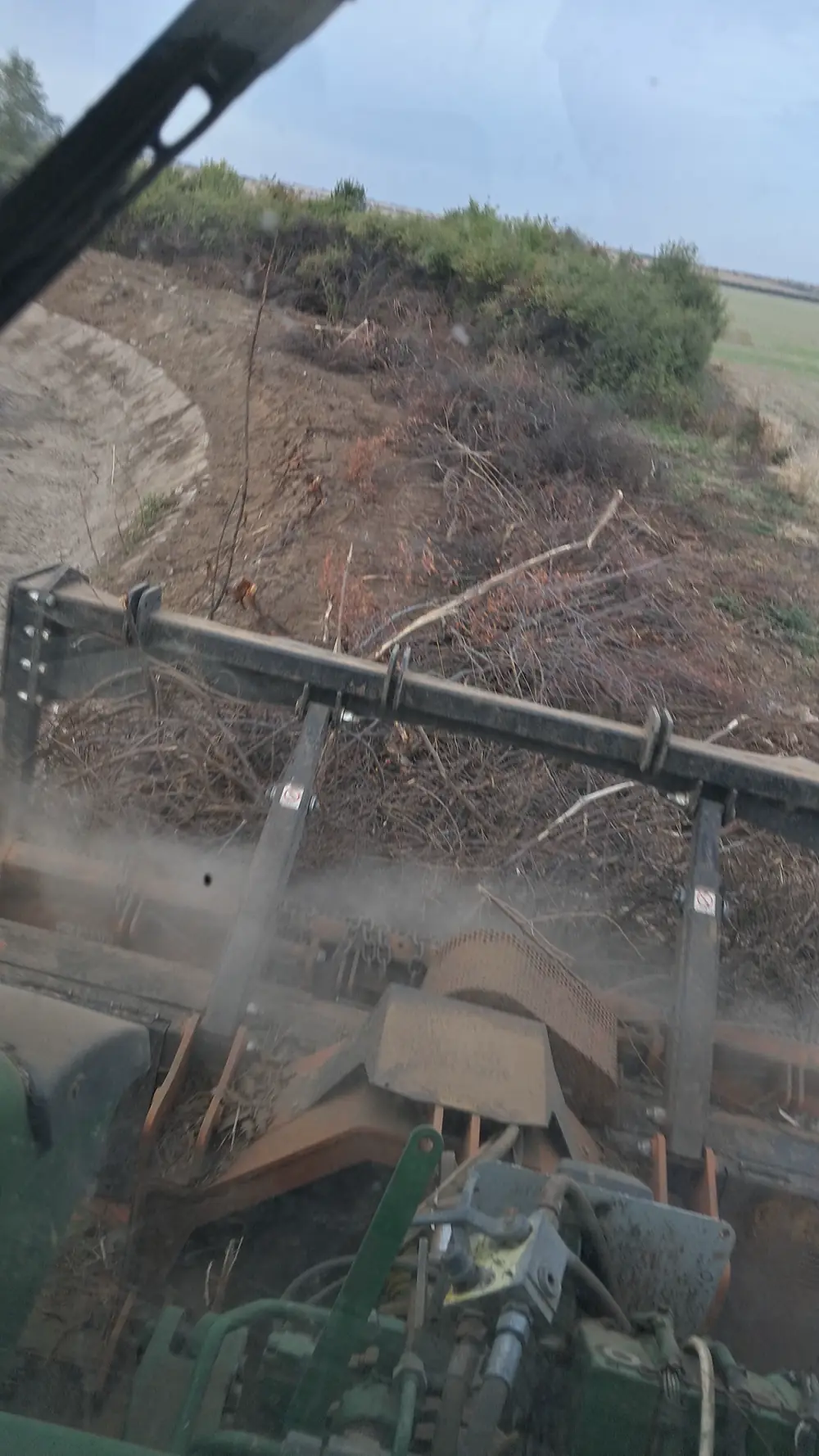
Documented heavy vegetation clearance along a restricted service strip beside irrigation infrastructure.
ZVER · Alpin Jobs EOOD · Bulgaria · EIK 200328636The actual shot shows a machine working on a service lane next to an irrigation canal. The site has dense brush vegetation, accumulated woody material and a limited corridor between the facility and the surrounding terrain.
We show the frame as proof of a specific work stage. It does not certify the condition of the entire facility, bottom cleaning, design geometry, restored hydraulic conveyance capacity, or final acceptance.
The exact contour is the first solution
Prior to machine work, it is specified whether the scope includes the service strip, one or both slopes, individual trees, bottom or only access restoration. The owner or operator of the facility determines the boundaries, conservation elements, and applicable operating regime.
The equipment and site review does not replace a design, permit or decision of the competent operator. For unknown pipes, cables, shafts, outfalls, unstable edges or water regime, the specific section is suspended until clarification.
It is being worked on in stages
- Traversal and marking. Initial conditions, access and obstacles are recorded.
- Opening an input lane. Controlled space for movement and turning is provided.
- Separation of material. Lumber, debris, rocks, and unknown objects are not automatically mixed.
- Slope processing. The machine operates in the confirmed loop and does not change the design profile by assumption.
- Site inspection. Clear access, residual vegetation, material and necessary follow-up operations are recorded.
Vegetation is not the only risk
Work beside a canal involves the bearing capacity of the service strip, slip risk, visibility at the edge, the direction of discharged material, people in the work zone and possible hidden infrastructure. A universal safe distance is not published - it depends on the machine, the operator, the terrain and the risk assessment.
Acceptance criteria are defined in advance
The criterion can be a free service lane, access to certain facilities, vegetation removed in a marked contour, separated materials and described residual activities. If the task involves bottom, silt, design profile or conductivity, this is measured and accepted separately from visible cleaning.
The general method and questions for a quote are described in the guide to working around an irrigation channel. See also the riverbed and channel service and the data-to-acceptance process.
Submit general photos, approximate length, which sides of the canal are covered, access, known facilities, water regime and desired acceptance criteria. Sensitive schemas are not sent in free public text.
Discuss the actual site with our team.
Send the location, approximate area, photographs, access information and required result.