
Construction materials
From a mixed construction site to recycled mineral material
Separation, controlled crushing, traceability and project-specific reuse of suitable mineral material under the applicable waste-management plan.
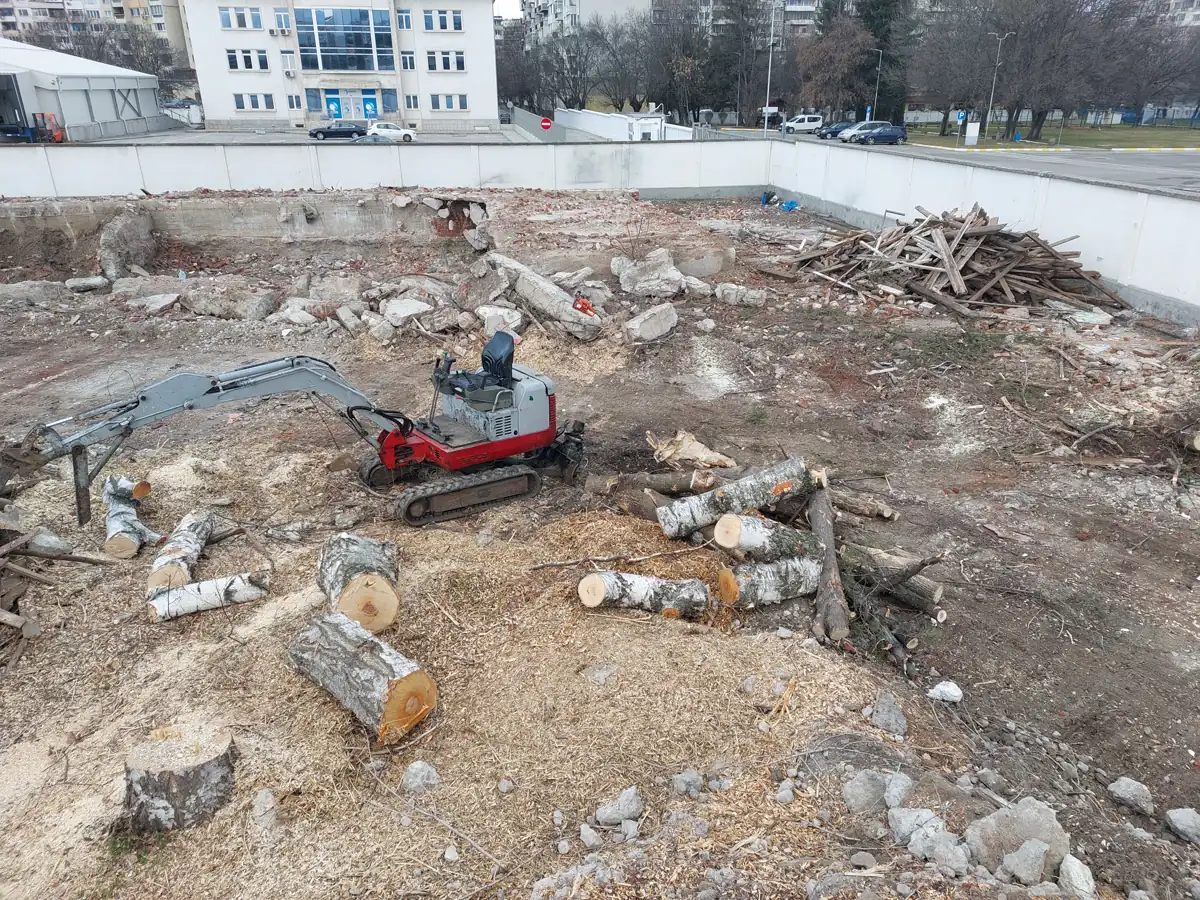
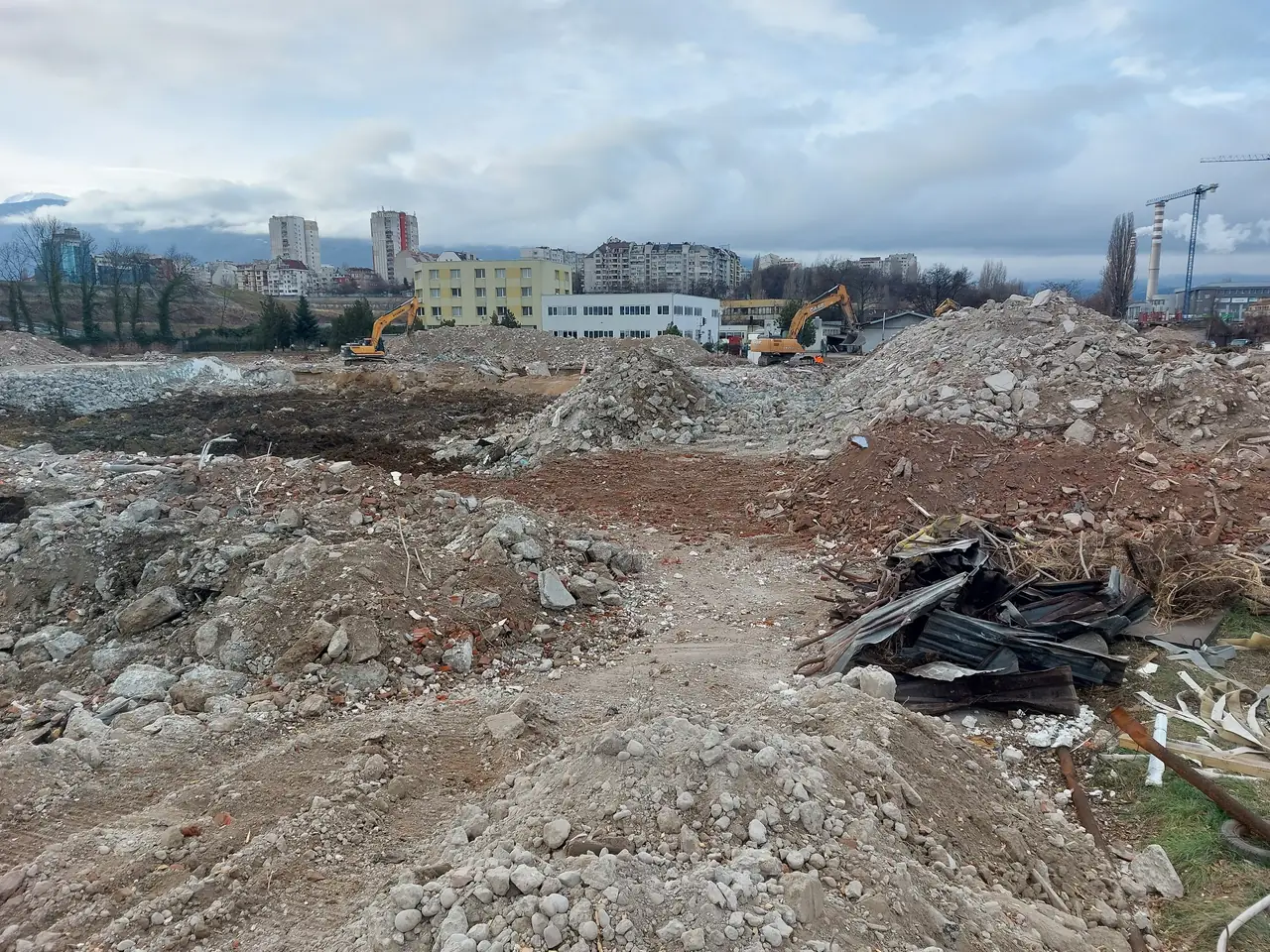
ZVER · Alpin Jobs EOOD · Bulgaria · EIK 200328636The opening photos show several different tasks: residual woody vegetation, cut trunks, wood and metal elements, concrete chunks, bricks and mixed construction piles. This is not a one machine, one pass job.
The frames show the initial/intermediate state. They are not evidence of completed crushing, produced fraction or already completed backfill. We present the planned sequence for such an object and the conditions under which the material can remain part of the solution.
The first step is identification, not crushing
Concrete, bricks, wood, metal, plastics and mixed waste have a different path. If they are mixed mechanically, the possibility of recovery decreases and control over the final material becomes more complicated. Therefore, during the inspection, separate work and storage areas are determined.
Questionable materials—for example, potentially containing asbestos, tars, oils, or other hazardous substances—are not crushed together with clean concrete. They are separated pending identification and resolution as applicable.
PUSO sets the link between the waste and the next operation
Where a Construction Waste Management Plan is applicable to the site, it shall specify the flows, separate collection, quantities, intended operations and final destinations. Controlled fragmentation and fractionation are part of the implementation of this plan, not a substitute for it.
Traceability must link the incoming material to the operation performed, the fractions obtained, the quantities, the control applied and the place of use or transfer. Deviations from the plan are not masked by the general term "recycling".
When concrete can be crushed in place
After separating the incompatible impurities, the mineral flux is evaluated. If the composition, quantity, site, technology and permitted mode allow, the concrete pieces can be crushed with mobile equipment. The process may include separation of reinforcement, screening and shaping of fractions according to the intended use.
Crushing alone does not automatically convert waste into a suitable building material. The required tests, evaluations, declarations and records depend on the status of the material, applicable standards and the specific design application.
Where suitable recycled mineral material may be used
Following site-specific confirmation, suitable recycled mineral material may be considered for:
Each application has its own requirements for composition, grain size, bearing capacity, placement and control. Therefore, the correct wording is: the suitable and controlled mineral fraction can be used on the site only for a permissible and predetermined application.
- backfill in a permissible area;
- temporary roads for construction machinery;
- workplaces and technological approaches;
- other layers or fillings expressly provided for in the project.
Where does the potential savings come from?
Processing the appropriate material in situ can limit two transport flows: the removal of part of the mineral mass and the delivery of part of the required new fraction. The effect depends on the volumes, the quality of the input material, the technology, the working area, the distances and the design requirements.
We do not promise a fixed percentage of savings. Real-world scenarios for the specific site are compared. If the material is contaminated, unsuitable or has no confirmed application, it is not put in just because it is already on site.
Work sequence
- survey, photograph and define boundaries;
- checking access, networks, neighboring objects and restrictions;
- inventory and zoning of material flows;
- reconciliation of fractions, objectives and operations with the applicable SOP;
- selective removal of vegetation and sorting of coarse materials;
- segregation of risky and inappropriate materials;
- controlled crushing and fractionation of the suitable mineral stream;
- applicable control and documented traceability;
- depositing the allowable fraction and managing the remainder.
The permitted scope is checked for the specific project
Alpin Jobs EOOD is entered in the public register of the Bulgarian Executive Environment Agency (ИАОС) with document No. 12-РД-00002682-00 dated 26.05.2026 for the transportation of specifically listed non-hazardous waste. Among them are soil and stones with code 17 05 04, other than the hazardous-waste entry 17 05 03, as well as other explicitly mentioned construction and wood flows.
This registration document does not authorize automatic treatment, disposal or acceptance at any site. For each project, the code, origin, permitted operation, recipient and applicable documents are checked. The design and regulatory responsibility of the individual participants is determined for the specific construction project.
Related Services
See comprehensive cleaning and recycling on site, site preparation for construction, excavation and earthworks, and transportation of materials and earth materials.
Submit location, general photos, approximate quantities, known origin of materials and future destination. Thus, one can assess what is applicable before an offer and mobilization.
Discuss the actual site with our team.
Send the location, approximate area, photographs, access information and required result.